Navigating the 'Mixed Dentition' Years (Ages 6 to 12)
Between grades one and seven, children's mouths contain an ever-shifting patchwork of small bright milk teeth, dark-pink loose gaps, wide scalloped new adult front teeth, and half-erupted permanent back molars:
- Lower 'Shark Teeth' (Ages 5–7): Sometimes wider adult lower front incisors sprout quietly inside the tongue-side row directly behind snug baby incisors, creating two temporary rows. Often persistent natural wiggling shifts baby teeth free—or quick clinic guidance checks clearance cleanly.
- Temporary 'Ugly Duckling' Front Gap (Ages 7–9): Slight central spacing or mild fan-shaped flaring between new upper adult front teeth frequently closes neatly on its own once adjacent adult canines descend around ages 11–12.
- Deep Back-Molar Reaching Blindness: As jaws lengthen backwards cleanly, children brushing straight forward often stop right at baby teeth—skipping fresh six-year molars completely unless brushes turn sideways smoothly behind back cheeks.
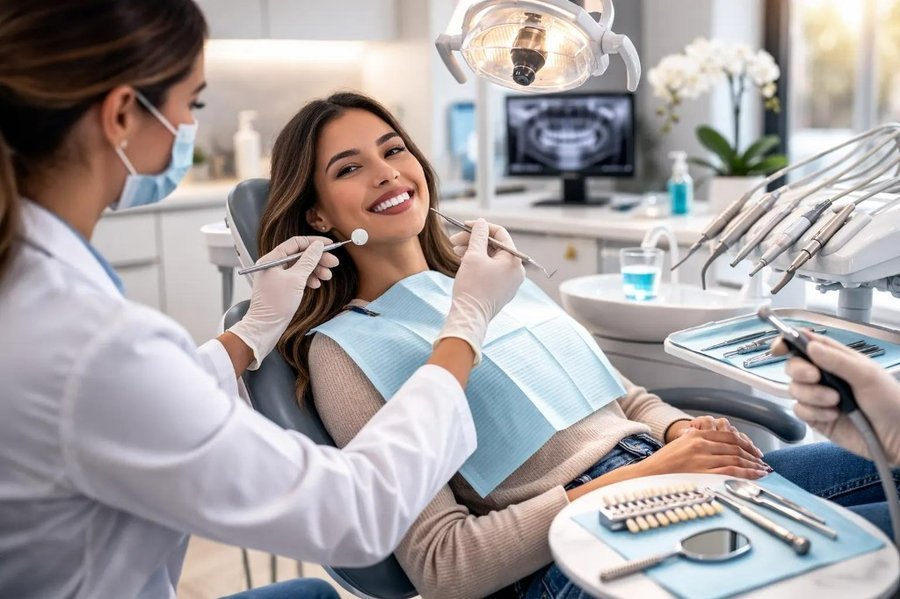
Sideways Cross-Brushing Trick for New Molars
Teach school children (and help during parent spot-checks) to sweep the toothbrush straight sideways across the rear gumline over newly emerging 6-year molars before full crown height clears the gum cuff cleanly.
And Don't Forget 12-Year Permanent Molars Around Middle School!
Just when preteen habits smooth out around sixth or seventh grade, another quiet quartet—the second permanent molars ('12-year molars')—pushes upright one step even further back behind the six-year molars! Similarly arriving without replacing baby teeth, they bring deep narrow valleys right as homework load rises and kids snack independently after school.
Keeping gentle six-month checkups steady smoothly through age 13 catches eruption flaps and plaque accumulation on 12-year molars just as reliably as earlier primary checks.
When Can School Kids Safely Brush Entirely Alone?
A remarkably reliable physical readiness milestone beats any arbitrary birthday: once a child demonstrates enough fine wrist coordination to neatly tie crisp shoelaces or write smooth cursive cleanly—typically between ages 7 and 9—hands are ready to manage back molars well.
Even through ages 9–11, weekly quick visual checks—checking plaque disclosing tablets or gently glancing along inner lower surfaces before school—keep independent brushers honest without nagging daily.
Smart School Lunchbox & Sports Hydration Habits in Anantapur
Long school mornings plus hot Rayalaseema afternoons encourage sticky packaged biscuits and sweet drinks between tuition classes if habits aren't structured cleanly:
Pack filling balanced lunches alongside sturdy plain stainless water bottles—reminding kids to take three clean water swishes right after midday snacks before racing out to play. When school athletes join active cricket, football, or athletics teams, discuss custom-fitting protection inside our sports mouthguard guide. You can also explore Indian lunchbox ideas in our nutrition guide for children's teeth.
Observing Early Crowding & Bite Clues Calmly During Primary School
Parents naturally worry the moment two wide permanent lower front incisors squeeze upright slightly twisted beside narrower spaces around age seven. Remember that growing child jawbones also gradually expand laterally during primary school years! Still, monitoring bite symmetry every six months helps distinguish minor temporary self-correcting spacing from genuine arch tightness, crossbites, or deep overbites that benefit from timely early guidance.
Checking peacefully in Anantapur lets families track changes objectively over time rather than reacting suddenly years later.
Supporting Grades 1 to 7 Smiles at MANASVI DENTO CARE
Every six months between ages 6 and 12 gives clinicians valuable opportunities to track permanent tooth positioning early and check freshly erupted 6-year and 12-year molars cleanly. At MANASVI DENTO CARE near Court Road, opposite Union Bank, Anantapur, Dr. K. Lakshmi, BDS examines mixed dentition thoughtfully and discusses preventive options like protective pit sealing (subject to clinical assessment).
Visit our Child Dental Care hub or review how molar sealants work to protect permanent back molars smoothly.
Your child's very first permanent adult molars—the '6-year molars'—erupt silently right behind the last baby molars WITHOUT any milk tooth wobbling out beforehand. Parents frequently mistake them for extra baby teeth!
Frequently Asked Questions
Count gently backward from the front middle split! Baby teeth normally total 5 per quadrant (10 top, 10 bottom); spotting a 6th wider molar tucked cleanly right behind the fifth baby molar confirms permanent six-year molars arrived.
Both are totally normal! Adult teeth naturally carry thicker golden dentin beneath translucent enamel compared to bright snow-white milk teeth, and tiny scalloped edges ('mamelons') smooth naturally over chewing years.
Protective pit-and-fissure sealants are widely recognized preventive barriers for deep grooved permanent molars when assessed appropriate during examination—discuss candidacy and availability in-clinic during a checkup.
Save any clean chipped fragment in cool milk/water and bring your child promptly for clinical inspection—small chips repair cleanly with tooth-colored composite.
Yes! Two quick swishes from their school water bottle dilute trapped biscuit starches and fruit acids instantly until evening dinner brushing.
- Centers for Disease Control and Prevention (CDC) — Protecting First Permanent Molars
- AAPD — Mixed Dentition Oral Hygiene & Preventive Guidelines
Compassionate Dentistry Near Court Road, Anantapur
MANASVI DENTO CARE is located at Court Road, opposite Union Bank, Anantapur, Andhra Pradesh, and is led by Dr. K. Lakshmi, BDS (Cosmetic Dental Surgeon, Registration No. A2407). We focus on clear explanations, gentle local comfort protocols, and preventive long-term oral health for individuals and families.