Why Visit One Exists Before Anything Ever Hurts
Across generations, many parents waited until five or six years old—often when a child felt throbbing tooth pain—before booking an initial clinic trip. Unfortunately, associating the dental chair strictly with toothache teaches children that dentists appear only alongside distress.
Modern guidelines from dental academies encourage a child's first dental visit much earlier, typically within six months after the first milk tooth emerges or around age one. Yet whether your little one is 14 months or four years old on day one, the primary clinical goal stays identical: introducing the room calmly, evaluating early enamel health, and equipping parents with customized daily habits.
When families schedule a child's first preventive consultation on a calm afternoon in Anantapur without pain urgency, the entire experience stays relaxed and lighthearted.
How to Talk About the Visit at Home (Without Planting Fear)
Preparation begins two days beforehand inside your living room—not inside the hallway outside the clinic:
- Read Picture Books or Play 'Counting Teeth': Let your child play dentist first by gently counting a teddy bear's teeth using a clean plastic spoon.
- Choose Neutral Upbeat Language: Say, 'Dr. Lakshmi is going to count how many bright teeth you grew and help us keep them super strong.'
- Skip Scare Warnings Completely: Avoid phrases like 'Don't worry, it won't hurt,' 'Be brave,' or 'No injections today'—kids hear 'hurt' and 'injections' immediately.
- Avoid Bribe Pressure: Promising giant toys only if they 'don't cry' accidentally makes children believe something terrifying awaits.
Inside the Room: A Minute-by-Minute Walkthrough
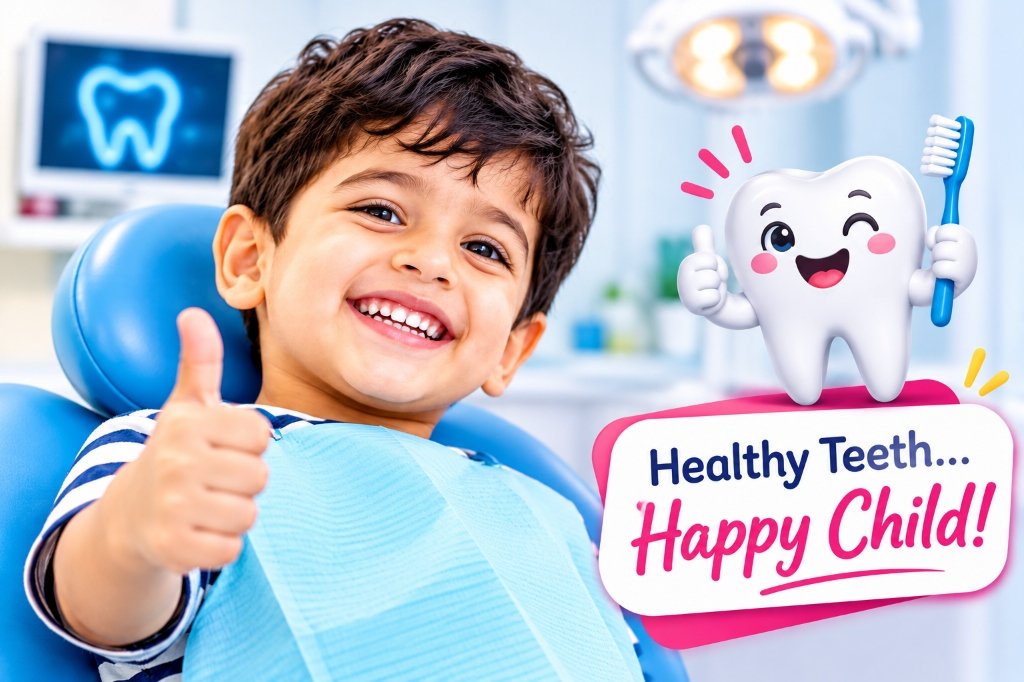
Knowing what typically happens inside the consultation room calms parents, which immediately calms children:
Step 1: Casual Hello and Comfort Chat
Rather than rushing straight to the overhead light, the clinician talks gently at your child's eye level—asking about favorite cartoons, school, or snacks—while reviewing medical history and feeding habits briefly with parents.
Step 2: Tour of Simple Mirror Tools
Your child touches or inspects a rounded mouth mirror and sees light gently shine on a fingernail first, confirming nothing pokes or surprises them.
Step 3: Knee-to-Knee or Parent-Supported Checkup
For infants and young toddlers, parents sit knee-to-knee facing the clinician so the baby leans back securely while still holding mama's or papa's hands. Older preschoolers often love pressing the button that raises the chair slightly.
Step 4: Quick Enamel, Gum, and Bite Overview
Using gentle mirror visibility, the doctor counts erupted teeth, checks along upper front gum margins for chalky-white early demineralization, inspects tongue mobility and gums, and evaluates jaw alignment patterns.
Step 5: Tailored Parent Coaching
Parents receive practical feedback on toothpaste smear size, reaching hidden back molars, sippy-cup or bottle transition timing, and when the next calm monitoring visit fits best.
What If My Child Wiggles or Keeps Lips Closed Tight?
Parents frequently apologize when a two-year-old squirms or turns shyly into their shoulder. Please never feel embarrassed—wiggling in a bright new setting is healthy toddler behavior, not bad manners.
Experienced patient teams pause gracefully, keep voices gentle, let children hold a comforting parent hand, and adjust angles patiently rather than turning a quick count into a tug-of-war. Even if a super-shy toddler simply peeks at the room, waves goodbye, and lets us check front incisors quickly, that visit still counts as a genuine victory toward trust! See more coaching strategies in our guide on easing child dental anxiety step-by-step.
Five Smart Questions Parents Can Ask Before Walking Out
Before wrapping up Visit One, take two quiet minutes to clarify practical day-to-day habits tailored directly to what Dr. K. Lakshmi observed:
- Is our child's current fluoride toothpaste smear size appropriate for their exact swallowing readiness right now?
- Are any back baby molars showing deep chewing pits or tight contact spaces that need targeted angle brushing or gentle floss picks?
- Does upper front lip lifting reveal any subtle chalky white marks that merit quick feeding or water-rinse tweaks?
- How do thumb-sucking, bottle transition, or pacifier timelines look for their current jaw width?
- Based on what we saw today, is a standard 6-month return ideal or should we check in a little sooner?
Planning Visit One With MANASVI DENTO CARE in Anantapur
Located at Court Road, opposite Union Bank in Anantapur, MANASVI DENTO CARE and Dr. K. Lakshmi, BDS (Registration No. A2407) welcome young first-time visitors with warm explanation and unhurried patience.
Whether you have a curious 15-month-old toddler or a five-year-old starting kindergarten who has never visited a clinic yet, setting a gentle checkup ahead of problems makes every future appointment dramatically smoother. Reach our team through the clinic directions and inquiry page to pick a calm morning slot.
The very best first dental visit involves zero discomfort: counting little teeth softly, chatting about daily habits, and sending your child home proud and smiling.
Frequently Asked Questions
Avoid threatening kids with the dentist as punishment for eating sweets, avoid warning them 'not to cry', and try not to arrive tired right over nap time.
Not automatically. Very young first visits normally focus on visual counting, comfort familiarity, and parent advice; additional steps depend purely on age, cooperation, and actual clinical findings.
Health academies advise introducing an open or free-flow cup around 6 months and phasing out bottles gradually by roughly 12–18 months, especially avoiding bedtime milk bottles.
Never too late—starting positive routine visits at age 3, 4, or 5 still uncovers silent enamel spots early and breaks fear cycles before school challenges begin.
Give a healthy non-sticky meal or snack 45 minutes beforehand and brush gently at home so toddlers arrive comfortable, cheerful, and crisp-smiled rather than hungry or covered in biscuit crumbs.
- American Academy of Pediatric Dentistry (AAPD) — Perinatal & Infant Oral Health Care
- Indian Dental Association (IDA) — First Dental Visit by Age One
- ADA MouthHealthy — Your Child's First Dental Visit
Compassionate Dentistry Near Court Road, Anantapur
MANASVI DENTO CARE is located at Court Road, opposite Union Bank, Anantapur, Andhra Pradesh, and is led by Dr. K. Lakshmi, BDS (Cosmetic Dental Surgeon, Registration No. A2407). We focus on clear explanations, gentle local comfort protocols, and preventive long-term oral health for individuals and families.